Blog
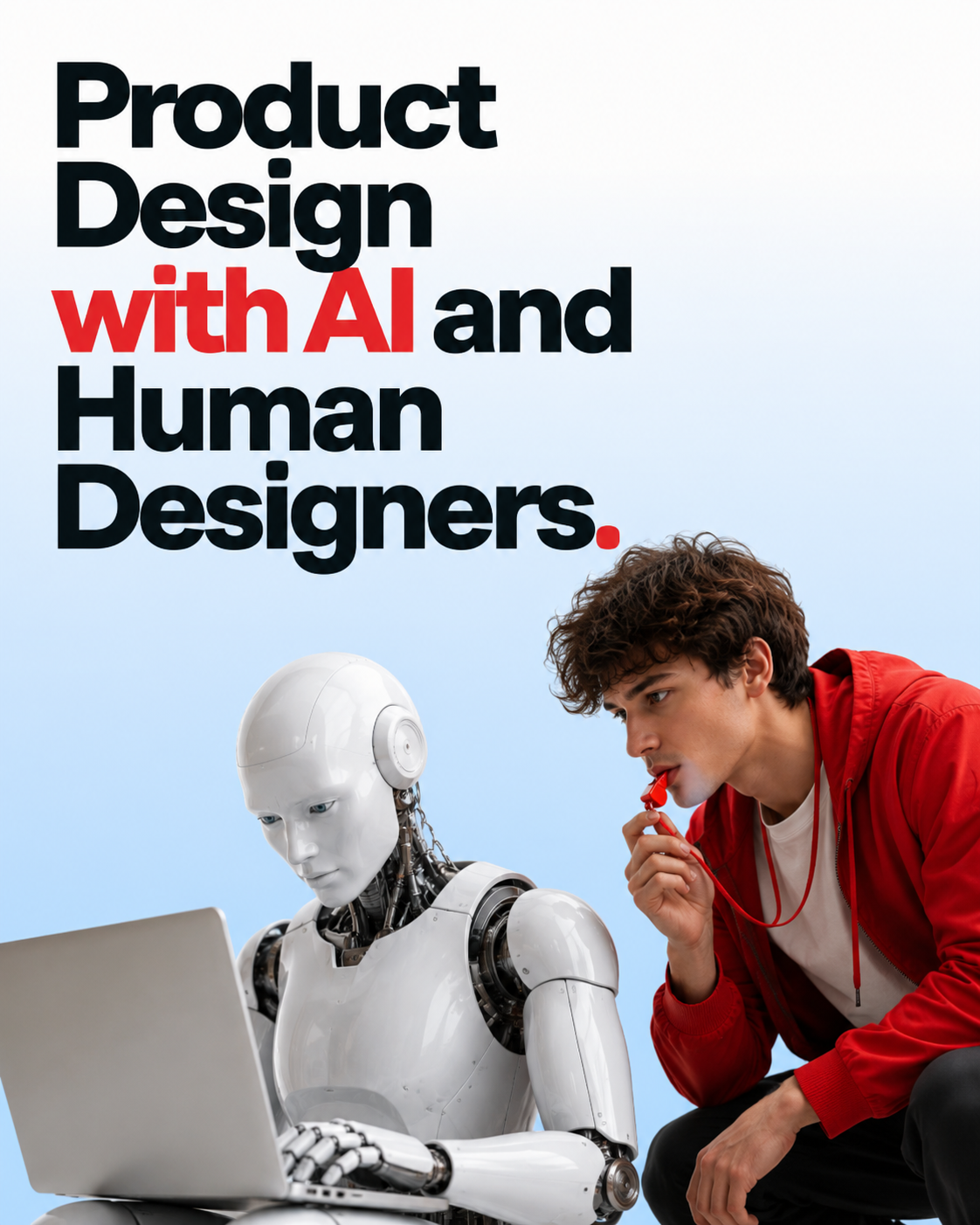
Product Design in the Age of AI and the Evolving Role of Human Designers
AI has changed the speed of digital product development dramatically.
Teams can now generate wireframes, write interface copy, create prototypes, summarize research, and automate repetitive workflows in ways that would have seemed unrealistic only a few years ago. The design process itself is becoming increasingly assisted by intelligent systems.
Yet despite all this acceleration, human-centered product design has become more important, not less.
At Opseek Digital, one of the biggest misconceptions we encounter is the idea that AI will eventually replace UI/UX designers entirely. In reality, AI is changing the nature of design work rather than eliminating the need for designers.
The reason is simple. Most digital products fail because they misunderstand people, not because they lack production speed.
AI tools are exceptionally good at generating outputs based on patterns. They can help designers move faster, organize systems more efficiently, and automate repetitive execution tasks. What they still struggle with is contextual judgment, emotional nuance, behavioral understanding, and strategic prioritization.
These are the areas where human designers remain essential.
Modern product design is increasingly about making sense of ambiguity. Businesses rarely come with perfectly defined problems. Users themselves often cannot clearly articulate why an experience feels frustrating or confusing. Strong UX designers identify patterns beneath behavior, uncover friction points, and translate complexity into intuitive interactions.
That process still requires human observation, empathy, and interpretation.
One of the most noticeable changes happening right now is the growing importance of systems thinking within UI/UX design. Products are becoming more interconnected across websites, mobile apps, dashboards, APIs, and AI-assisted interfaces. Designers are no longer designing isolated screens. They are shaping entire ecosystems of interactions.
This requires a much deeper understanding of information architecture, user behavior, accessibility, and long-term scalability.
AI also introduces entirely new design challenges.
Users increasingly interact with products that behave dynamically rather than predictably. Interfaces now adapt, generate content, make recommendations, and automate workflows in real time. Designing these experiences requires careful attention to transparency and trust.
For example, users need to understand why an AI system made a recommendation, how their data is being used, and when automation should be overridden by human control. These are product design decisions as much as technical ones.
The companies building successful AI-enabled products are usually the ones investing heavily in human-centered UX strategy.
Another important shift is that visual execution alone is becoming less valuable as a differentiator. AI can already generate reasonably polished layouts and interface concepts very quickly. What businesses increasingly need from designers is strategic thinking.
That includes defining user flows, structuring onboarding experiences, prioritizing features, designing scalable systems, improving accessibility, and aligning digital products with actual business objectives.
In many ways, the role of the designer is becoming closer to that of a systems architect.
Collaboration is changing too. Product designers now work more closely with developers, AI engineers, data teams, and growth strategists than ever before. The boundaries between product design, web application design, and business strategy continue to blur.
This is particularly visible in SaaS and startup environments where rapid iteration cycles demand tighter alignment between product thinking and technical execution.
The rise of AI-generated interfaces has also made originality more valuable. As generic layouts become easier to produce, brands will increasingly compete through distinctive user experiences, thoughtful interaction patterns, and stronger emotional resonance.
Users remember products that feel intentional.
That intentionality comes from human decision-making.
Good designers understand when to simplify, when to create friction deliberately, when to slow users down, and when to prioritize emotional reassurance over efficiency. These are subtle decisions that emerge from experience, research, and empathy rather than automated generation alone.
The future of product design is unlikely to belong purely to humans or purely to AI. It will belong to teams that understand how to combine both effectively.
At Opseek Digital, we see AI as a tool that enhances the design process rather than replacing it. The businesses that succeed in the coming years will not simply be the ones using AI fastest. They will be the ones creating digital experiences that still feel understandable, trustworthy, and deeply human.